
SAFETY RESOURCE GUIDE
Range Anti-Tip Devices: Requirements & Safety Considerations
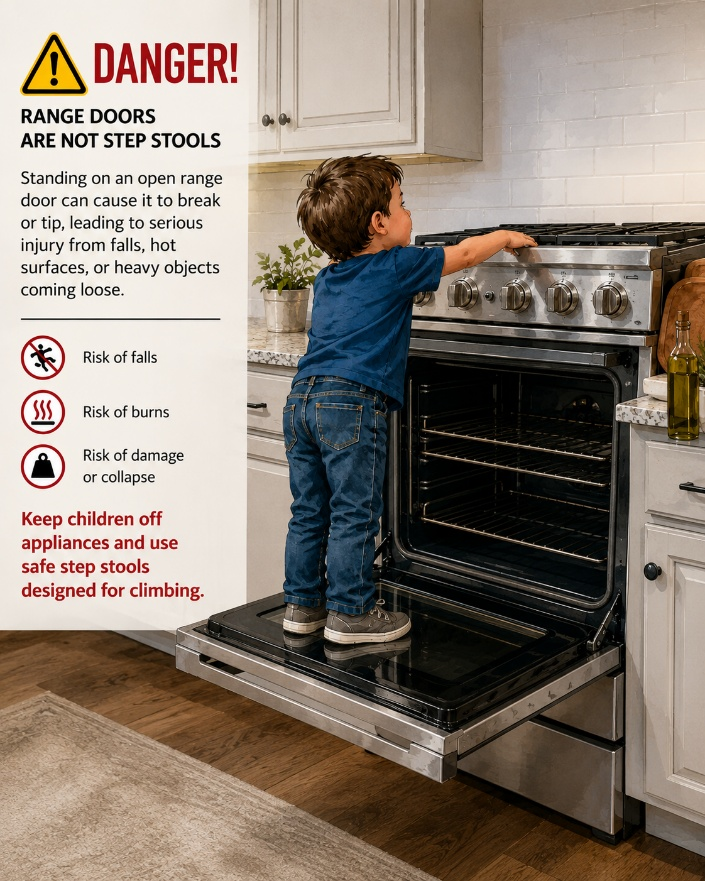
⚠️ DANGER!
RANGE DOORS ARE NOT STEP STOOLS
- Risk of falls
- Risk of burns
- Risk of damage or collapse
Safety Device
Residential Ranges
IRC Requirement
Final Inspection Item
Why Anti-tip Devices Matter
A range that tips forward can create serious safety hazards. Children may attempt to stand or climb on an open oven door, while adults may unintentionally place significant weight on the door while loading or unloading cookware.
Without an engaged anti-tip device, the appliance may overturn, potentially causing severe burns, impact injuries, or property damage from spilled hot food and liquids.
Installation Requirements
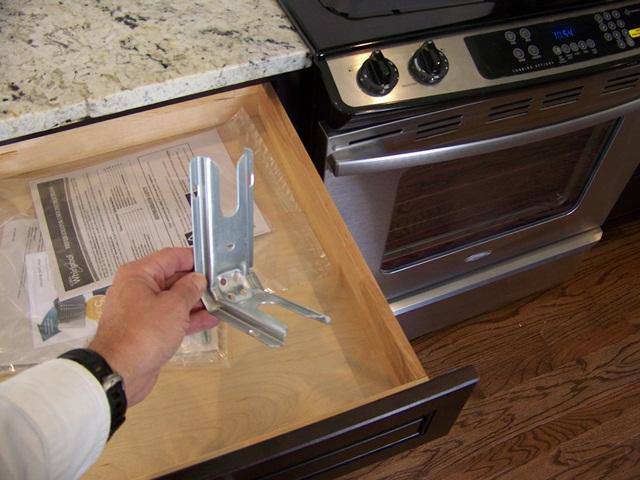
Anti-tip devices are commonly secured to the floor or wall behind the range.
When the appliance is pushed into its final position, one of the rear leveling legs must properly engage the anti-tip bracket to prevent the range from tipping forward.
Why Anti-tip Devices Matter
Installation Requirements
Proper Installation Includes
1
Secure the Anti-Tip Bracket
Install the anti-tip bracket according to the manufacturer's installation instructions.
2
Engage the Rear Leveling Leg
Ensure one rear leveling leg fully engages the bracket after the appliance is moved into position.
3
Maintain the Device
If flooring is replaced or the appliance is moved for servicing, verify the bracket remains correctly installed and engaged.
4
Verify Proper Operation
Confirm the appliance resists forward movement before it is returned to service.
- Inspection Considerations
Common Verification Methods
Visual Confirmation
Verify the anti-tip bracket is installed in the proper location.
Rear Leg Engagement
Confirm the rear leveling leg is fully engaged with the bracket.
Tip-Resistance Test
Carefully test that the appliance resists forward tipping without causing damage.
Suggested Inspection Comment
Approved anti-tip device was not observed or could not be verified at the kitchen range. Cooking appliances are required to be installed in accordance with the manufacturer's installation instructions. Recommend verification and correction by a qualified appliance installer.
Code References
2024 IRC Section M1307.1 – Appliance Installation
2024 IRC Section M1307.1.1 – Installation Requirements
Manufacturer's Installation Instructions
Applicable Listing and Labeling Requirements
Summary
- Key Takeaways
- Verify bracket installation.
- Confirm rear leg engagement.
- Inspect whenever access allows.
- Recommend correction when verification is not possible.